

On 5 October 2026, OpenAI announced two changes to ChatGPT Ads that matter more than the usual platform update. The first is a new visual ad format, moving beyond the text based sponsored cards advertisers have worked with so far. The second, and arguably the more consequential of the two, is a substantial expansion of measurement, attribution and brand suitability tooling.
Taken together, these are the changes that move ChatGPT Ads from an interesting experiment into something a marketing director can reasonably put a budget behind and defend internally. Here is what has actually changed, and what it means if you are weighing up the channel.
A visual ad format, tested during image generation
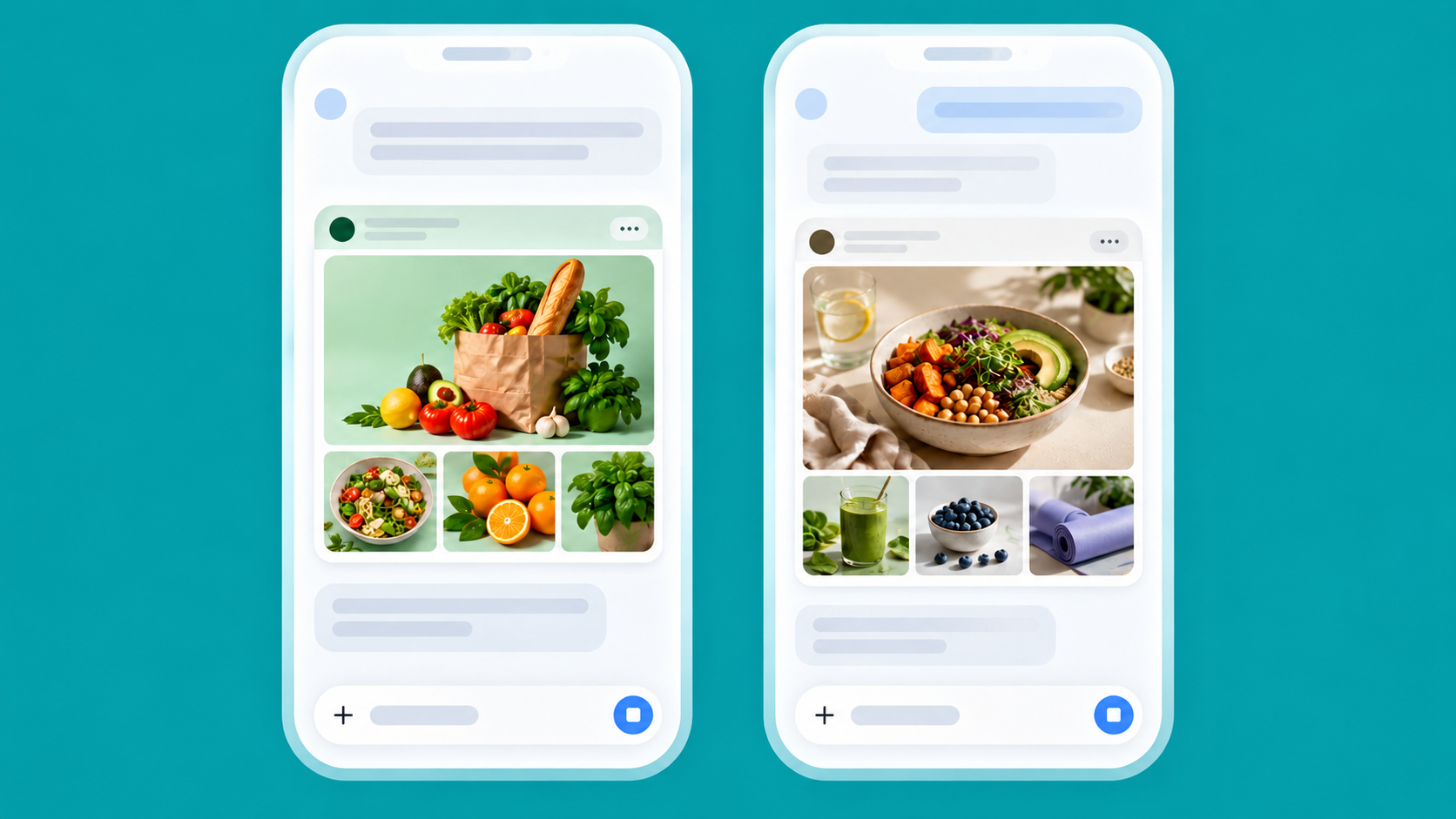
The headline change is a format that lets brands tell their story through images rather than text alone. OpenAI frames the purpose as helping people picture how a product or service might fit into their lives, whether that is through product inspiration, the product in use, or the experience it makes possible.
What makes the placement interesting is where it is being tested first: during image generation in ChatGPT. That is a genuinely novel moment to advertise into. The user has asked for something to be created and there is a short wait while it happens, so attention is already on the screen and the interruption cost is low. It is closer in feel to a loading state than to an interstitial.
OpenAI has been specific that the ads are clearly labelled and remain separate from the image being created, and that advertising does not influence the answers ChatGPT gives. That separation matters commercially as well as ethically, because the moment users suspect the assistant’s recommendations are for sale, the value of the whole environment drops.
Two practical caveats before anyone gets carried away. Testing begins later in October 2026, in the United States only, with an initial group of advertisers. For UK businesses, this is a format to watch and prepare for rather than one to plan this quarter’s budget around.
The measurement story is the bigger development
For most advertisers, the measurement expansion is the more useful half of this announcement. The honest barrier to ChatGPT Ads so far has not been whether the audience is there. OpenAI puts ChatGPT’s reach at 1.2 billion people each week. The barrier has been proving what the channel actually contributed, in tools finance teams already trust.
That gap is now being closed from several directions at once.
Getting conversion data in. Integrations with Hightouch, Tealium and LiveRamp make it easier to pass conversion data from systems you already run into ChatGPT Ads, rather than maintaining a separate pipeline.
Attribution across web and app. OpenAI now supports a long list of attribution partners, including AppsFlyer, Triple Whale, Adjust, DV Rockerbox, Northbeam, Branch, Singular, Kochava, Airbridge and Tenjin, covering Conversions API, reporting and click attribution. For full funnel and advanced measurement there are partnerships with Fospha, Measured and INCRMNTAL.
Incrementality. This is the one worth paying attention to. OpenAI is working with Haus, Measured and WorkMagic on geo based experiments designed to show the causal impact of ChatGPT Ads, rather than attributed impact alone. OpenAI describes this work as still early, which is a fair characterisation, but the intent is the right one. Attribution tells you what got credited. Incrementality tells you what would not have happened otherwise, and on a new channel that distinction is everything.
The early results, and how to read them
OpenAI shared three partner reported findings alongside the announcement.
DV Rockerbox reported that WeightWatchers saw an attributed cost per acquisition on ChatGPT Ads that was 15.3% lower than its blended paid search benchmark. WorkMagic reported a statistically significant lift for the wellness brand Dose, with 67% of incremental purchases coming from customers who were new to the brand. Triple Whale reported that 93% of Portland Leather’s visitors arriving from ChatGPT Ads were new.
These are encouraging numbers and worth knowing. They also deserve to be read with a clear head. They are early findings, shared by measurement partners, published by the platform itself, covering three brands in specific categories. That is not the same as a broad, independently audited performance benchmark, and the honest position is that nobody has one yet for this channel because it has not existed long enough.
What the pattern does suggest is something more useful than any single percentage: a consistent skew toward new customers rather than existing ones. If that holds across more advertisers, it points to ChatGPT Ads functioning as an incremental acquisition channel rather than one that harvests demand you would have captured anyway through brand search. That is a meaningfully different proposition from most paid channels, and it is the thing worth testing for yourself.
Brand suitability is finally being addressed
The third strand concerns the environment ads appear in. OpenAI’s placement guardrails assess whether a given conversation is appropriate for advertising at all, with the explicit aim of keeping ads away from emotionally vulnerable or sensitive contexts. This is an area where conversational advertising carries risks that page based advertising does not, since a conversation can turn personal in a way a product page cannot.
For advertisers with narrower requirements of their own, Negative Phrases are now available to qualifying advertisers, giving some direct control over where ads will not appear.
OpenAI is also running brand suitability evaluation pilots with DoubleVerify and Integral Ad Science. The structure is notable: independent partners assess how the brand safety standards perform in a controlled testing environment, without accessing private user conversations. That is a reasonable attempt at squaring two things advertisers and users both want, independent verification on one side and conversation privacy on the other.
What UK advertisers should actually do with this
Three practical takeaways.
Do not wait for the visual format to start learning the channel. The visual ads are a US test with a limited group of advertisers. The existing ChatGPT Ads formats, campaign structure, context hints and conversion tracking are available to UK advertisers now, and the learning curve on targeting through context hints rather than keywords is the part that takes time. Build that understanding before the formats get more sophisticated, not after.
Get the measurement foundation right first. The single most useful thing in this announcement for a smaller advertiser is not the attribution partner list, most of which suits larger stacks. It is the direction of travel. If your conversion tracking, Conversions API setup and attribution are already clean, you will be able to judge the channel honestly. If they are not, you will run a test, get an ambiguous result and conclude nothing.
Treat early benchmarks as hypotheses, not targets. The new customer skew in those partner findings is a good hypothesis to test in your own account. It is not a number to put in a forecast.
The wider shift worth noticing
What makes this announcement significant is less about any individual feature and more about what it signals. Visual formats, an attribution partner ecosystem, incrementality experiments and independent brand safety evaluation are the infrastructure of a mature advertising platform. Seeing them arrive within roughly eight months of ChatGPT Ads first appearing is a fast timeline by any standard.
For advertisers, the practical implication is that the window where ChatGPT Ads is cheap and uncrowded because it is hard to measure is closing. Measurement is what brings bigger budgets, and bigger budgets bring competition. The brands that build genuine capability in the channel while it is still relatively quiet will have an advantage over those that wait for it to be comfortable.
How Mass Reach can help
Mass Reach has been running ChatGPT Ads campaigns since UK self serve access opened, alongside the Google Ads, Meta Ads and LinkedIn Ads work we deliver for UK B2B and eCommerce brands. As a London based performance marketing agency and Google Partner, our approach to this channel is the same as any other: get the tracking right first, test deliberately with a controlled budget, and judge the channel on commercial outcomes rather than platform reported metrics alone. If you are weighing up whether ChatGPT Ads deserve a place in your mix, get in touch and we can talk through what a sensible first test would look like for your business.