
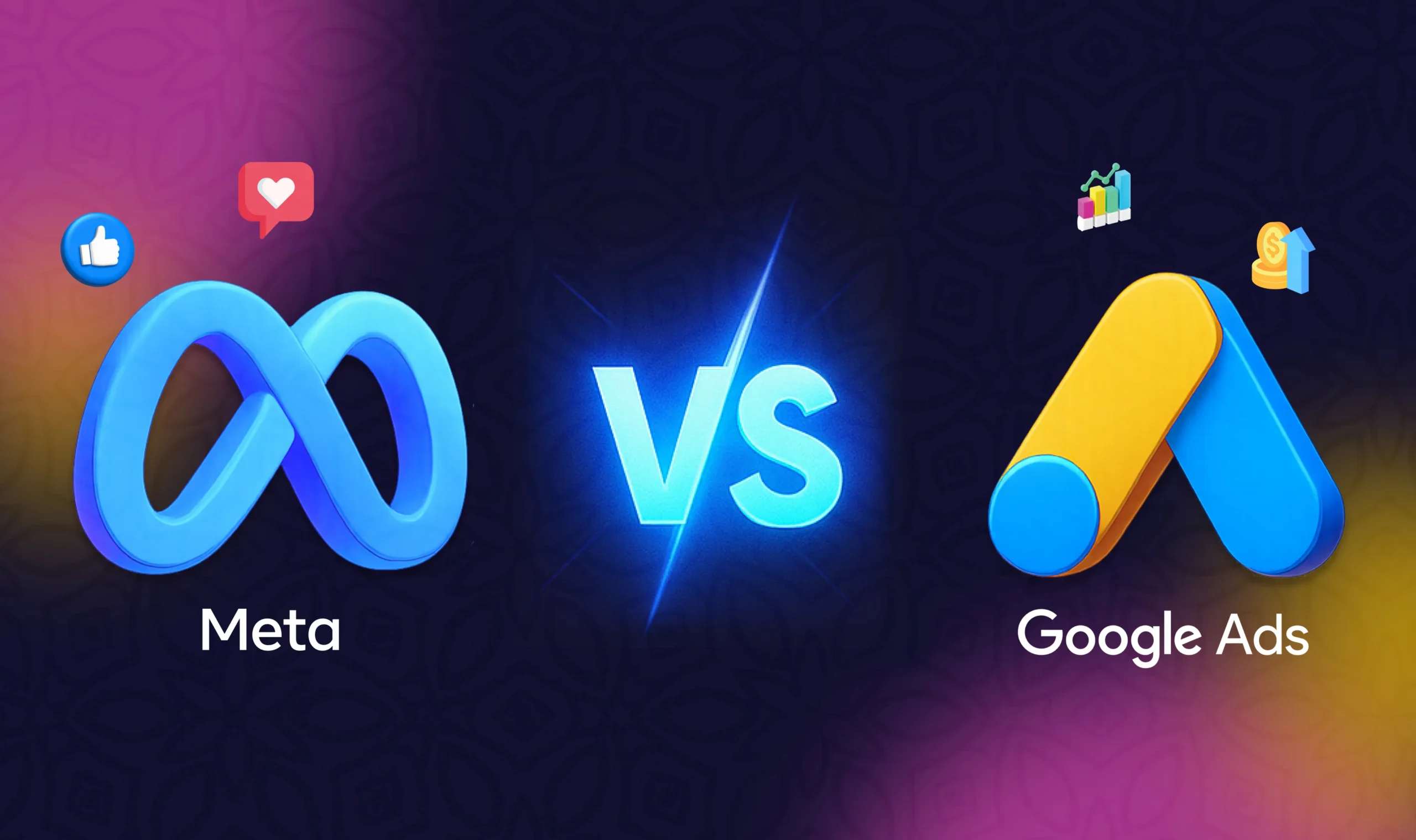

You’ve got a paid media budget and two giant platforms competing for it. Google Ads and Facebook (Meta) Ads are both powerful but they work very differently. This guide breaks down exactly which one deserves your money, and when the smartest move is to use both.
Quick Verdict
Google Ads
Best for capturing demand. Use when people are actively searching for what you sell. Ideal for high-intent, bottom-of-funnel conversions.
Facebook / Meta Ads
Best for creating demand. Use to reach audiences who don’t know they need you yet. Powerful for brand building, remarketing and visual products.
The Core Difference: Intent vs. Interruption
Before you spend a single pound or dollar, you need to understand the fundamental philosophical difference between these two platforms because it shapes everything else.
Google Ads is a pull channel. Someone types “best CRM software for small business” into Google. They have intent. They’re raising their hand. Your ad appears in front of that active searcher. This is why Google Ads typically converts at a higher rate, you’re meeting demand that already exists.
Facebook Ads is a push channel. You identify an audience (say, small business owners aged 30–50 who follow entrepreneurship pages) and you interrupt their scroll. They weren’t looking for your product. You’re creating the desire. This requires more creative work and more patience in the funnel but the targeting precision can be extraordinary.
Understanding this distinction is the foundation of every smart budget decision. For more on how these fit into a full funnel strategy, see our guide to building a PPC funnel that converts.
Industry Data
According to WordStream’s benchmark data, the average Google Ads conversion rate across industries is around 3.75% for search. Facebook’s average sits closer to 9.21% — but that figure includes softer conversions like lead form fills, not necessarily purchases.
Head-to-Head: The Full Comparison
| Factor | Google Ads | Facebook / Meta Ads |
|---|---|---|
| Primary mechanism | Keyword intent (search) | Audience targeting (interest/behaviour) |
| Ad formats | Text search, Shopping, Display, YouTube, Performance Max | Image, Video, Carousel, Stories, Reels, Lead Ads |
| Avg. CPC (UK/US) | £1.50–£5+ (industry dependent) | £0.40–£1.50 (lower floor) |
| Best funnel stage | Bottom (purchase intent) | Top & Middle (awareness, consideration) |
| Audience data | Search behaviour, site visits | Demographics, interests, lookalikes, behaviours |
| Creative requirements | Copy-focused (text, product feeds) | Visual-first (images, video essential) |
| Setup complexity | Moderate (keyword research required) | Moderate (audience & creative testing) |
| Minimum viable budget | ~£500–£1,000/mo | ~£300–£500/mo |
| B2B suitability | Excellent | Good (LinkedIn often better for B2B) |
| E-commerce suitability | Excellent (Google Shopping) | Excellent (dynamic product ads) |
Platform Strengths: Scored Side by Side
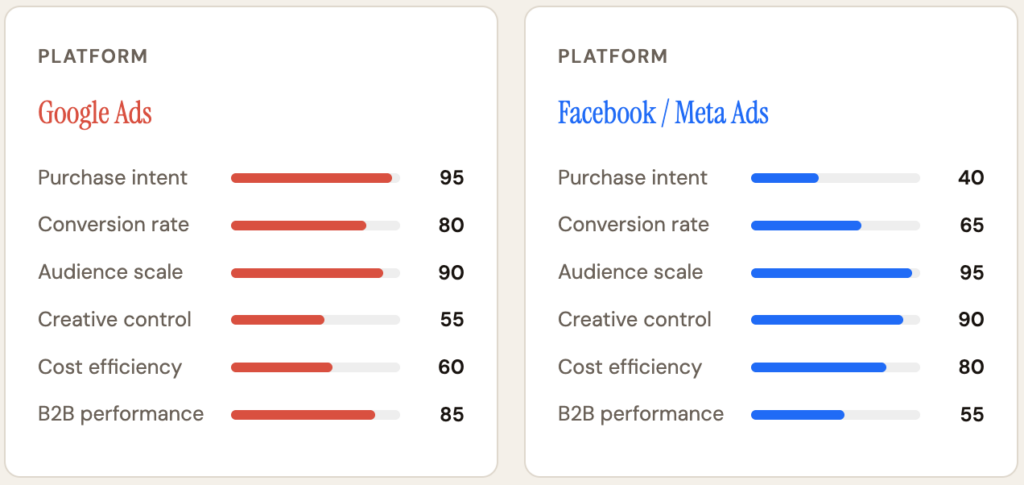
Here’s how each platform rates across key performance dimensions, based on aggregated industry reporting from HubSpot and Social Media Today:
When to Choose Google Ads
Google Ads earns its place at the top of most performance marketing stacks because it intercepts people at the exact moment they’re looking to buy. If someone searches “emergency boiler repair London” at 11pm, they’re not browsing; they’re ready to call.
- You sell something people actively search for (services, software, products with specific names)
- Your sales cycle is short and intent-driven (e.g. emergency services, SaaS trials, e-commerce)
- You want to capture competitors’ branded traffic
- You run an e-commerce store and want Google Shopping visibility
- Your budget is limited and you want the highest-intent traffic first
- You’re in B2B and prospects are using Google to research solutions
Pro Tip
Start with Google’s Keyword Planner (free with a Google Ads account) to validate whether real search demand exists for your product. If there are fewer than 100 monthly searches for your core terms, Google Search Ads may not be the right fit yet.
Read our guide on how to set up your first Google Ads campaign for a step-by-step walkthrough.
When to Choose Facebook / Meta Ads
Facebook Ads shine when your audience doesn’t know they need you yet or when the product is visual, emotional, or aspirational. If you’re launching a new product, building a brand, or selling something with strong lifestyle appeal, Meta’s targeting and creative canvas are hard to beat.
- You’re launching something new with no existing search demand
- Your product is visual or lifestyle-driven (fashion, food, fitness, home décor)
- You have a strong video creative and want broad awareness
- Remarketing: re-engaging website visitors or past customers
- Lookalike audiences: finding new customers who mirror your existing buyers
- Your CPA on Google is too high and you need a lower-cost volume channel
Watch Out
iOS 14.5+ changes hit Meta hard. Apple’s App Tracking Transparency update significantly reduced Meta’s ability to track off-platform conversions. If you rely on Facebook pixel data, be aware that conversion reporting may undercount by 20–40%. Use Meta’s Conversions API server-side tracking to restore accuracy.
Meta’s Ads Manager gives you access to some of the most sophisticated audience-building tools in digital advertising but only if you invest in strong creative. Without scroll-stopping imagery or video, even perfect targeting won’t save your campaign.
The Real Answer: Use Both (with a Strategy)
The most successful paid media programmes in 2026 don’t treat this as an either/or choice. They use Google to capture existing demand and Facebook to create new demand, running them as complementary layers of the same funnel.
A well-constructed dual-platform strategy looks like this:
- Top of funnel (Facebook): Video ads and interest-targeted campaigns build awareness with cold audiences
- Mid funnel (Facebook Remarketing): Dynamic product ads re-engage people who visited your site but didn’t convert
- Bottom of funnel (Google Search): Capture the same people when they’re now actively searching for solutions
- Brand defence (Google): Bid on your own brand name to prevent competitors stealing your converting traffic
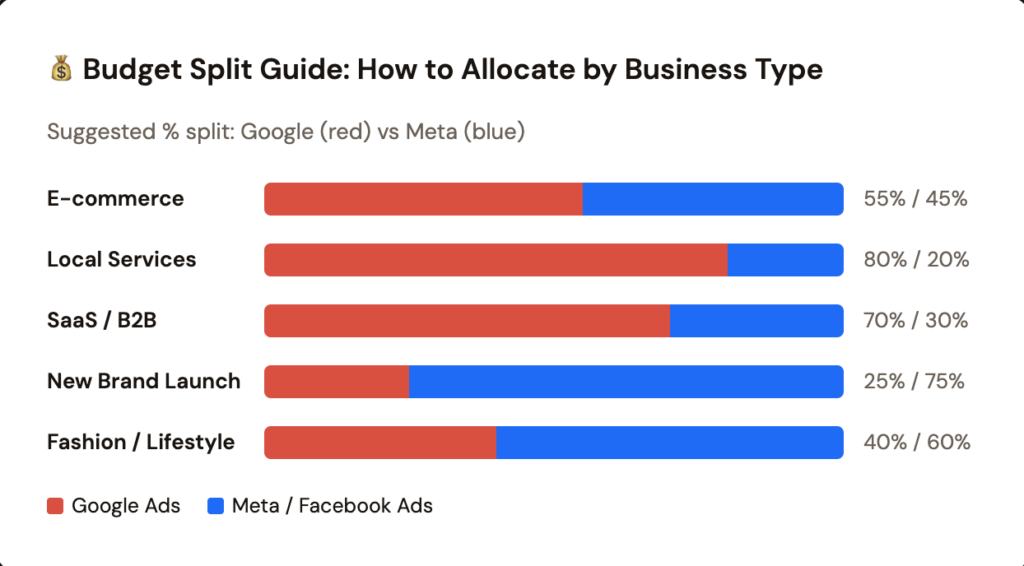
Budget Split Guide: How to Allocate by Business Type
Suggested % split: Google (red) vs Meta (blue)
Cost: What Does Each Platform Actually Charge?
Both platforms use auction-based pricing, so your costs depend heavily on your industry, targeting and quality scores. That said, some useful benchmarks exist.
According to WordStream’s industry benchmark reports, Google Search CPCs range from around £0.80 in the arts sector to over £50 in legal services. The legal, insurance, and finance verticals are notoriously expensive which is exactly why many advertisers in those industries use Facebook to nurture audiences before converting on Google.
Facebook CPMs (cost per 1,000 impressions) have risen significantly since 2020 but remain generally lower than Google CPC equivalents. Revealbot’s 2025 data shows average Facebook CPMs in the UK hovering around £8–£14, depending on audience and placement.
Cost-Saving Insight
Your Google Ads Quality Score directly affects your CPC. A high Quality Score (8–10) can reduce your cost-per-click by up to 50% compared to a low score. It’s the single biggest lever for reducing Google Ads spend.
2026 Trends Changing the Equation
Google’s Performance Max campaigns
PMax now dominates Google’s recommended campaign types, combining Search, Shopping, Display, YouTube and Gmail into a single AI-driven campaign. It’s powerful but opaque and can cannibalise your existing campaigns if set up incorrectly.
Meta’s AI-powered Advantage+ campaigns
Meta has moved aggressively toward automated targeting with its Advantage+ Shopping Campaigns. Early adopters in e-commerce have reported 20–30% improvements in ROAS but manual targeting control is significantly reduced.
Signal loss and first-party data
Both platforms are increasingly reliant on first-party data as cookies phase out. Building a customer data strategy email lists, CRM uploads, server-side tracking; is no longer optional. Advertisers with rich first-party data have a significant advantage on both platforms in 2026.
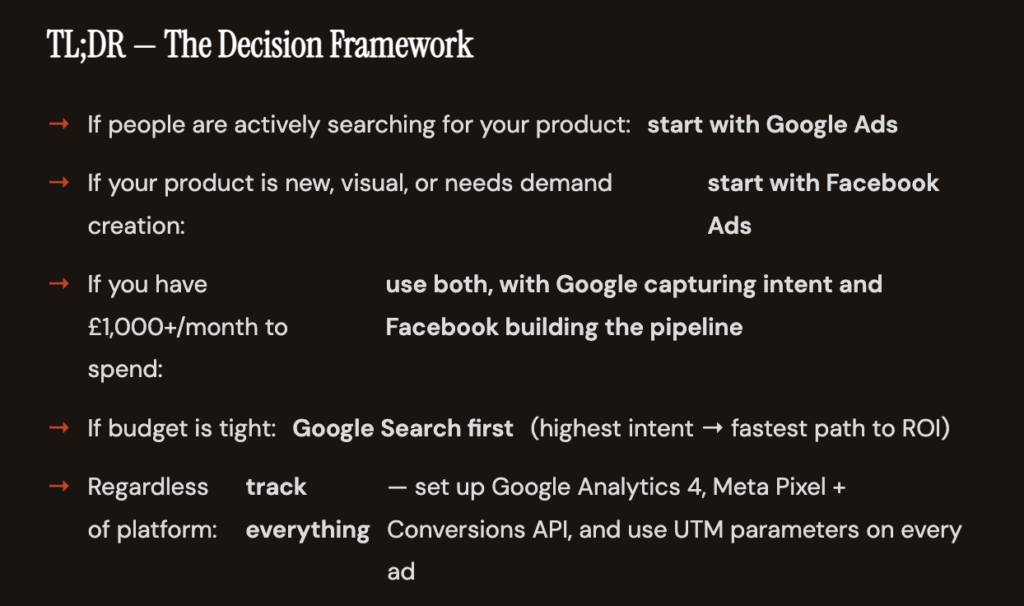
The best marketers in 2026 don’t argue about Google vs. Facebook they ask “where is my customer in the funnel?” and pick the right platform for that moment. Master both and you’ll have a sustainable, scalable paid media engine.
Ready to go deeper? Explore our free PPC strategy audit or get started with our free PPC Consultation.